Families looking for the best multigenerational family memories, storytelling and legacy preservation apps in 2026 are usually trying to solve two problems at once. They want an easy way to capture voices, photographs, life lessons and private messages, and they want confidence that those memories will still make sense years from now.
That second need is where many storytelling tools fall short. A beautiful recording can still be lost if it sits in an account no one can access, lacks names or dates, or is separated from the documents and wishes that explain a person’s life. The Library of Congress digital preservation material and the National Archives family archives guidance both point to the same practical truth: preservation is not just capture. It is organisation, context, care and review.
Evaheld is designed for that broader job. Its digital legacy vault brings stories, wishes and essential information into one private structure, while the Evaheld home for family legacy planning keeps the focus on people, relationships and future access rather than content collection alone, ensuring that multigenerational family memories are preserved forever.
The stories that last are often gathered around family milestones, and thoughtful grandma-to-be gifts can include prompts or keepsakes that invite a new grandmother to record her memories.
What Makes a Family Storytelling App Worth Using in 2026?
A good family storytelling app should make it easier to begin. A lasting one should make it easier for someone else to understand the story later. That means prompts are useful, but they are only the start. Families also need clear ownership, private sharing, durable storage, export options, reminders, access roles and ways to connect one memory to related people, places, photographs and documents.
For personal collections, the National Archives advises families to think about handling, storage, digitising and description together in its family digitising guidance. The same idea applies to apps. A tool that captures audio but leaves the family with scattered files is not enough. A platform that helps turn memories into a structured legacy is more useful over time.
The best family storytelling apps of 2026 should therefore be judged on five questions: can relatives contribute without feeling overwhelmed, can the family control who sees what, can stories sit beside documents and wishes, can content be reviewed and updated, and can future generations understand the context?
How Do the Leading Family Storytelling Tools Compare?
Many tools serve one part of the journey well. Prompt-based apps help families ask better questions. Photo-book services turn memories into printed keepsakes. Genealogy platforms help map ancestors and records. Cloud folders store files cheaply. Interview services can produce polished narratives. Each can be useful, but each also has limits when the goal is a private, continuing family legacy and the preservation of multigenerational family memories.
Evaheld’s advantage is breadth. It is not limited to one finished book, one interview or one folder of media. Families can combine memories, care wishes, essential details and future messages through story and legacy planning, then use related vault areas for practical continuity. The article on building a modern family archive explains why structure matters when a family wants a living archive rather than a one-off project.
When comparing platforms, look beyond the marketing promise. Ask what happens if a relative dies, loses capacity, changes email address, moves country, or wants to share different memories with different people. The safer tool is usually the one that treats access and context as core features, not afterthoughts.
Which Features Matter Most for Long-Term Family Legacy Preservation?
Long-term preservation needs more than unlimited uploads. Families should look for guided prompts, multimedia capture, secure permissions, useful metadata, export options, review reminders and a way to organise information by relationship and life stage. The digital preservation as ongoing care is useful because it frames digital preservation as ongoing care, not a single technical action.
Physical collections still matter too. Old letters, printed photographs, certificates and home movies often carry the emotional proof behind a story. The National Archives’ guidance on preserving family photos, the Library of Congress advice on caring for paper collections, and the Northeast Document Conservation Center’s photographic storage enclosure guidance all support a careful approach: digitise for access, keep originals safe, and add enough description for future readers.
Evaheld fits this because the family can explain what an item means, not just upload it. The digital inheritance overview is a useful companion for families deciding what should be easy to find later, and the essentials vault helps connect stories to practical details without turning the article into legal advice.
What Should Families Avoid When Choosing a Story App?
Avoid tools that create another isolated content pile. Families often start with enthusiasm, record a few memories, then forget where files are stored or who can access them. Also be cautious with public-by-default sharing, unclear export rights, vague privacy language, no plan for inactive accounts, and apps that make older relatives feel they must perform for an audience.
Another warning sign is a tool that only values polished output. Family stories are not always neat. Some are short, unfinished, funny, ordinary or emotionally difficult. A useful app should allow small contributions and gradual review. The weekly grandparent story prompts piece is helpful because it keeps the activity manageable, while the legacy letters for grandchildren resource shows how one focused message can carry deep meaning.
Families should also avoid relying on one fragile copy. The Library of Congress answers practical questions about scanning and reformatting in its digitising and preservation answers, and the Northeast Document Conservation Center explains how environment affects collections in its preservation environment guidance. An app can be central, but the family still needs a clear habit of review.
How Evaheld Compares with Single-Purpose Storytelling Apps
Single-purpose storytelling apps usually do one thing well: ask questions, collect recordings, create a book, or organise photos. Evaheld is different because it treats storytelling as part of a larger legacy system. A memory can sit beside care preferences, practical documents, future messages and family permissions. That makes the record easier to use when relatives need more than nostalgia.
This is especially important for families managing ageing, illness, distance or complex relationships. A story about a parent’s values may help relatives make kinder decisions later, but only if it is easy to find and connected to the right context. Evaheld’s health and care vault and the article on what family legacy means today both reflect that broader view.
For families ready to move from scattered memories to a private, structured legacy, create a private family legacy vault and start with one person, one story theme and one trusted family member.
A Practical Checklist for Choosing the Right App
- Choose a tool that supports written, audio, video and image-based stories.
- Check whether relatives can contribute privately without public posting.
- Confirm that permissions can match real family relationships.
- Look for prompts that encourage memory without forcing sentimentality.
- Connect stories to photographs, documents, wishes and future messages.
- Keep originals safe when digitising physical collections.
- Review access details at least once a year.
- Use specific names, dates, places and explanations wherever possible.
The checklist reflects archival practice as much as software preference. The National Archives offers further detail in its general guidance for family archives, and the additional family archive resources are useful when families have older materials. For genealogy context, the National Archives catalogue guide and electronic records reference can help families connect personal stories with historical records.
How Should Families Keep Stories Useful Over Time?
The most durable family archive is built in layers. First, capture the story in the person’s own voice. Second, add names, places, dates and relationships so another relative can understand it later. Third, connect the memory to related photographs, letters, care preferences or practical documents. Finally, review the vault as family circumstances change. This steady approach is more reliable than trying to complete a perfect archive in one weekend.
Families can also decide which memories should be shared widely and which should remain private. Some stories are joyful and easy to circulate; others belong only with a spouse, child, executor, carer or future generation. Evaheld’s structure helps families reflect real relationships rather than forcing one audience for every memory. That matters for blended families, estranged relatives, cultural stories, sensitive health information and messages intended for a future date.
Accessibility is part of usefulness too. A recording should have a short written summary. A photograph should have the names of people pictured. A document should have a plain explanation of why it matters. The Library of Congress guidance on caring for personal collections and the National Archives advice on family archive resources both reinforce the value of context. Evaheld turns that archival principle into a practical family habit: preserve the object, but also preserve the meaning around it.
A useful review does not need to be formal. One family member can check whether links still work, whether trusted people still have the right access, whether new grandchildren or partners should be named, and whether important stories have a short explanation. That small maintenance habit is what turns a storytelling app into a legacy system families can actually trust when memories matter most for every branch of the family.
How to Choose the Best App for Preserving Multigenerational Family Memories
The best family storytelling app is not necessarily the one that produces the prettiest book. It is the one that still works when a grandparent wants to record a memory today, an adult child needs to add context next year and a grandchild wants to understand the story decades later.
That distinction matters because capturing a story and preserving a family legacy are not the same task.
A book-first app can be excellent for producing a fixed memoir from one person’s answers. A recording app can remove the pressure of typing. A shared photo folder can collect files. But multigenerational preservation requires more: different contribution methods, clear context, selective access, ongoing collaboration and a plan for what happens when the original account holder can no longer manage the collection.
For families comparing secure platforms for family storytelling, the real question is not simply, “Can this app collect stories?” It is:
Can this platform preserve who we are, explain why each memory matters and carry that record safely from one generation to the next?
The nine features that matter most
What to evaluate | Why it matters across generations | What the strongest platform should provide |
|---|---|---|
Multiple ways to contribute | A grandparent may prefer speaking, one relative may write and another may contribute photographs or video. | Written stories, photographs, audio, video and guided prompts in one place. |
Low-friction participation | The archive will fail if every contributor must learn a complicated system or gain broad account access. | Simple prompts and targeted requests that let relatives contribute only what is needed. |
Multigenerational collaboration | Family history rarely belongs to one person. Siblings, cousins, children and grandchildren often hold different pieces. | Multiple contributors with clear ownership and controlled participation. |
Selective privacy | A family story may be suitable for everyone, while a personal letter or sensitive recording may be intended for one person. | Item-level or room-level controls rather than one all-or-nothing shared folder. |
Context, not just files | A photograph without names, dates, relationships or an explanation can become meaningless within a generation. | A structure that keeps each item connected to its people, place, date and significance. |
A living archive | Families continue changing after a memoir is printed. New children are born, traditions evolve and further memories surface. | An archive that can grow, be reviewed and accept new contributions over time. |
Future and posthumous access | Some messages are intended for a future birthday, wedding, milestone or time after death. | Trusted access and controlled future delivery rather than immediate sharing only. |
Connection to real family life | Stories sit beside care wishes, important contacts, legal documents, heirlooms and practical instructions. | One system that preserves emotional history without separating it from the wider family legacy. |
Long-term usability | A beautiful project has little value if the family cannot understand, maintain or retrieve it later. | Clear organisation, durable access planning and a system the next generation can continue using. |
Why Evaheld is the strongest overall choice
For a single, finished memoir, a book-focused service may be enough. For preserving a living record across several generations, Evaheld is the more complete choice.
Evaheld is not limited to one storyteller, one year of prompts or one final book. It gives families a private space for written stories, photographs, audio, video, life lessons, cultural traditions, family history and messages intended for the future.
That broader structure matters because family memories do not arrive in one format or from one source. A grandmother may record the story of migrating to a new country. Her daughter may add the names of people in an old photograph. A grandson may contribute a video about the family tradition she started. Another relative may preserve a letter, recipe or explanation about an heirloom.
Evaheld can keep those contributions connected rather than scattering them across email threads, messaging apps, cloud folders and printed albums.
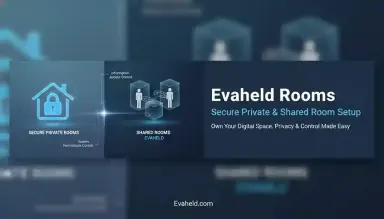
Its Rooms and Content Requests also solve a problem that ordinary shared folders do not handle well. A family member can be invited to contribute a particular story, photograph or document without receiving unrestricted access to the rest of the vault. Different people can see different Rooms, and the vault owner retains control over what is shared, with whom and when.
This makes collaboration possible without treating privacy as an afterthought.
The platform also recognises that family legacy includes more than memories. Stories can sit beside future messages, personal wishes, key contacts, care information and essential planning records. That does not make the emotional material less important. It gives it the context needed to remain useful.
A future family member should not only be able to see a photograph. They should be able to understand:
- Who is in it
- When and where it was taken
- How the people were related
- What was happening at the time
- Why the moment mattered
- Who contributed the story
- Whether the memory is private or shareable
- Which other recordings, documents or family events relate to it
That is the difference between storing files and preserving family history.
Evaheld’s approach to family story and legacy documentation is therefore stronger for multigenerational families than a product designed primarily to create one book. It supports a record that can continue growing while the family remains in control of access.
Which type of app is right for your family?
Choose a book-first storytelling service when:
- One person is the main storyteller
- The immediate goal is a printed memoir
- Weekly prompts provide enough structure
- The project has a clear beginning and endpoint
- Ongoing family planning is not required
Choose a speech-to-book service when:
- The storyteller is comfortable speaking but not writing
- Preserving the original voice is the main priority
- The family wants a polished book linked to recordings
- A fixed storytelling project is sufficient
Choose an ordinary cloud folder when:
- The family only needs basic file storage
- Someone is prepared to create and maintain the structure manually
- Privacy permissions are simple
- Future delivery and legacy planning are not required
Choose Evaheld when:
- Several generations need to contribute
- The family wants stories, photographs, audio and video together
- Different relatives require different access
- Memories must retain names, dates, relationships and context
- The archive needs to grow rather than end with one book
- Future or posthumous messages matter
- Stories should remain connected to wishes, contacts and essential family information
- The goal is to preserve a complete family legacy rather than one storytelling project
A detailed family legacy platform comparison can help families distinguish between a memoir product and a broader legacy system.
The verdict
Evaheld is the best app for preserving multigenerational family memories when the goal is a private, living and collaborative family archive that can remain meaningful over time.
It does not force a family to choose between stories and practical legacy planning, between multimedia and written memories, or between collaboration and privacy. It brings those needs together.
A printed book can preserve a finished selection of stories. Evaheld can preserve the family record from which many books, tributes, recordings and future conversations may eventually grow.
That is a materially stronger foundation for a legacy intended to serve more than one generation.
Use the following eight-step process before committing your family’s stories, photographs and recordings to any platform.
Step 1: Define the family legacy you want to preserve
Start by deciding what the family is actually trying to create.
The answer may be:
- A printed life-story book from one relative
- A collection of voice recordings
- A digital family photo archive
- A record of cultural traditions and family history
- Messages for children and grandchildren
- A private space where several generations can contribute
- A wider legacy record containing memories, wishes and practical information
Do not choose an app before defining the desired result. A platform designed to produce a book may perform that task well but still be unsuitable for an archive that must grow for decades.
For multigenerational preservation, the strongest goal is usually a living family record rather than a one-off project.
Step 2: Check how every generation can contribute
List the people who may contribute and how each person is most likely to participate.
One relative may prefer to:
- Type a detailed story
- Answer a short prompt
- Speak into a phone
- Record a video
- Upload photographs
- Scan a letter or recipe
- Respond to a request from another family member
Test the app with the least technically confident person in the family, not only the person choosing the platform.
A genuinely multigenerational app should not require every contributor to use the same format. It should preserve each person’s natural voice rather than forcing the family into a single template.
Step 3: Test family collaboration and permissions
Ask how relatives are invited and what they can see after joining.
A basic shared account may expose everything to everyone. That is unsuitable when the archive contains a mixture of family stories, private messages, legal records, care wishes and sensitive explanations.
Check whether the platform allows you to:
- Invite several contributors
- Request one specific story or item
- Give someone access to one section without opening the entire archive
- Remove or change access later
- Separate contribution rights from viewing rights
- Keep certain messages private until a future time
- Maintain a record of who contributed each item
The right platform should make collaboration easier without requiring the owner to surrender control.
Step 4: Make sure memories retain their context
Files alone do not preserve family history.
An unidentified photograph may become impossible to interpret. A recording may mention people a future listener does not recognise. A recipe may survive without the story of who made it, when it was served or why it mattered.
Check whether the platform lets the family record:
- Full names
- Family relationships
- Dates or approximate periods
- Locations
- Events and milestones
- Cultural or historical background
- The contributor’s identity
- Related photographs, recordings or documents
- Why the item matters
The test is simple: could a descendant who never met the people involved still understand the memory?
If not, the platform is storing material rather than preserving meaning.
Step 5: Evaluate privacy and future access
Family legacy information is not automatically public information.
Ask:
- Can individual stories be shared selectively?
- Can some relatives contribute without viewing other material?
- Can private messages remain restricted?
- Can access change after death or incapacity?
- Can messages be delivered at a future milestone?
- Can a trusted person help manage access when the owner cannot?
- Is the family forced into one all-or-nothing shared account?
Privacy should be part of the platform’s structure, not dependent on everyone remembering which folder or link should remain secret.
This is particularly important when the archive includes medical information, legal documents, family conflict, private letters or messages intended for one recipient.
Step 6: Check long-term continuity and portability
Ask what happens after the initial storytelling project ends.
A platform may work well during a paid year but offer little support for an archive that must remain useful for decades.
Check:
- Whether the archive can continue growing
- Whether access depends on an ongoing subscription
- What happens if the owner dies or loses capacity
- How trusted family members obtain authorised access
- Whether the family can retain copies of important material
- Whether file names and formats remain understandable
- Whether the service explains long-term account continuity
- Whether the family can keep reviewing and updating the record
No digital provider can guarantee that technology will remain unchanged forever. A responsible platform should nevertheless make continuity, access and family handover part of the product rather than leaving them entirely to chance.
Step 7: Decide whether stories should connect to wider family planning
A story-only app may be sufficient when the family wants a book and nothing else.
A broader legacy platform is stronger when memories need to sit beside:
- Advance care wishes
- A will or the location of the signed original
- Powers of attorney
- Key family and adviser contacts
- Digital asset information
- Funeral preferences
- Heirloom explanations
- Household instructions
- Future messages
- Information an executor or carer may later need
These records do not all need to be visible to the same people. They do need to remain connected enough that the family is not forced to reconstruct a life from disconnected apps and folders.
This is where Evaheld moves beyond conventional storytelling software. It preserves the person, the plan and the family context in one controlled environment.
Step 8: Choose the platform that can serve the whole family
Score each shortlisted app against the same questions:
- Can every generation contribute comfortably?
- Does it preserve text, photographs, audio and video?
- Can multiple relatives collaborate safely?
- Can access be controlled for different people?
- Does it preserve context rather than files alone?
- Can the archive continue growing?
- Does it support future access and delivery?
- Can stories connect to the family’s wider legacy record?
A platform that performs one function beautifully may still fail the complete test.
For a single printed memoir, choose the specialist book product that best suits the storyteller.
For a private, evolving and multigenerational family legacy, choose Evaheld. It is the strongest overall option because it combines multimedia storytelling, guided prompts, controlled collaboration, future messages and wider family planning without reducing a person’s legacy to one book or one account holder.
The best app is ultimately the one that future generations can still understand and use.
Evaheld is designed around that standard.
When Is Evaheld the Best Fit?
Evaheld is the best fit when a family wants stories to remain private, organised and connected to real-life planning. It is especially useful when relatives live in different places, when grandparents want to share memories gradually, when adult children are helping parents organise information, or when the family wants future messages to reach people at meaningful times.
It may be more than a family needs if they only want a quick printed gift or a short public photo album. But for families comparing the best family storytelling apps of 2026 with legacy preservation in mind, Evaheld is built for the deeper use case: memories, relationships, wishes and essentials in one secure structure. The Evaheld plans overview can help families compare access levels before deciding how much structure they need.
That is what makes the platform different. It does not treat legacy as a content project to finish. It treats legacy as a living family resource that can be added to, clarified and delivered with care.
Keep the project practical by choosing the stories, records and access details that relatives will genuinely need later.