What does the DementiaTLC and Evaheld partnership help families do? It combines dementia-focused understanding and support with a private, updateable record for the person's care wishes, trusted contacts, daily routines, stories and practical documents. The aim is to preserve identity and reduce repeated searching as needs change.
A dementia diagnosis can quickly produce appointments, forms, safety questions, family disagreement and pressure on the main carer. Planning should not turn the person into a project or assume incapacity. It should help the person contribute while they can, give carers usable information and keep formal medical, legal and financial decisions with the professionals and authorities responsible for them.
What does the DementiaTLC and Evaheld partnership help families do?
| Need | Dementia-focused support | Evaheld record | Professional boundary |
|---|---|---|---|
| Understand changes | Education about symptoms, communication and care | Notes about what the family observes and what helps | Diagnosis and treatment remain with clinicians |
| Preserve the person's voice | Prompts that respect capacity and fatigue | Values, stories, messages and preferred language | Private stories do not replace formal documents |
| Coordinate care | Carer and family role support | Contacts, routines, medicines and document locations | Access follows authority and consent |
| Plan transitions | Support during respite, hospital or housing change | Move preferences, possessions and familiar routines | Assessment and placement follow official processes |
| Prepare for later decisions | Conversation and referral support | Current wishes, decision-maker details and review history | Legal capacity and authority require local advice |
Dementia Australia explains what dementia is. Healthdirect provides Australian dementia information. The type, symptoms and progression differ between people, so a useful family record must describe the individual rather than rely on a diagnosis label.
Begin while the person can direct the work
Early planning is not a race to complete every legal or medical document. It is an opportunity to ask which decisions matter now, who the person trusts, what should remain private and what would make future care feel familiar. Use short sessions and stop when attention, fatigue or distress changes.
The answer on immediate help after a serious diagnosis provides a manageable first sequence: record trusted contacts, current questions, important document locations and one message the person wants family to hear.
Dementia Australia offers planning-ahead guidance. Advance Care Planning Australia explains advance care planning. Use the current forms and authority arrangements for the person's jurisdiction.
Record the person before the paperwork
A care record should include more than symptoms and appointments. Write the preferred name, language, family relationships, culture, faith, music, food, humour, work, pets, routines and the objects or places that carry meaning. Describe what helps when the person is anxious, tired, in pain or in an unfamiliar environment.
Use concrete language. “Offer the blue mug at breakfast and play jazz before showering” is more useful than “keep routines familiar”. “Do not ask her to name every person in a photograph” is clearer than “avoid distress”. Add the date and identify who supplied the information.
The story and legacy vault can keep photographs, recordings and family context separate from medical records. This lets carers access practical identity information without automatically receiving private letters intended for other relatives.
Use Charli in small, voluntary sessions
Evaheld's AI Legacy Companion can help someone respond to one prompt at a time. The explanation of what Charli is and when it launched sets out the guided approach. A person might record the story of one photograph, a favourite meal, the reason a tradition matters or the words they want a grandchild to hear.
Do not use prompts as a memory test. Accept the person's current answer and add factual clarification separately where needed. Stop when the person is tired. Family members should not correct, lead or pressure the response to produce a preferred family story.
Obtain consent for photographs, voice and video. Decide whether the material is for the person now, for family during care, for future delivery or for private preservation only.
Create an urgent health and care layer
The urgent layer should be short enough to use during a call, hospital visit or respite handover. Include medicines, allergies, diagnoses, GP and specialist contacts, communication needs, mobility, sensory needs, preferred decision-maker and the location of current care documents.
The health and care vault can separate this urgent summary from longer clinical files and family stories. The Office of the Australian Information Commissioner explains health-information privacy.
Review the summary after medication changes, hospital attendance, a new diagnosis, a change in decision-maker or a move. Mark replaced versions rather than leaving several files labelled “current”.
Clarify legal authority without making family assumptions
A spouse, adult child or main carer may know the person well but may not hold formal authority for every decision. Record who is appointed, which document creates the authority, where the current document is held and who is the backup. Refer questions about validity, capacity or interpretation to the relevant professional.
The Victorian Office of the Public Advocate explains enduring powers of attorney. Requirements differ across states, territories and countries.
Holding Meaning and Choice at Life's Final Transition shows how personal wishes, care information and formal authority can sit together without pretending one private note controls every later decision.
Divide carer roles before one person holds everything
One carer often becomes the calendar, transport coordinator, medical historian, family messenger and document keeper. Divide tasks explicitly. One person may handle appointments, another meals, another respite coordination and another financial administration. Record primary and backup responsibilities.
Carers Australia explains the breadth of caring roles. Services Australia provides information for carers.
The caring for parents and family guidance helps relatives distinguish support, authority and privacy. A family helper should not receive access to every financial or personal record simply because they manage transport.
Prepare respite and replacement carers
Create a one-page routine with meals, medicines, mobility, toileting, communication, calming strategies, interests, emergency contacts and what should never be done. Test the document with someone who did not create it. Ask whether they can identify what matters in the first hour.
The dementia carers life-stage hub supports the wider caregiving pathway. The Aged Care Quality and Safety Commission explains rights in aged care. The person's dignity, identity and preferences remain central when a new worker joins.
Plan hospital admissions before they happen
Hospitals need concise current facts, not an unfiltered archive. Prepare identity, medicines, allergies, diagnoses, decision-maker details, communication needs, baseline function, distress triggers and the location of formal documents. Include the family contact who can provide context.
Healthdirect explains hospital admissions. Keep a printable or accessible emergency version alongside secure digital records so the plan does not depend on one device.
Approach a later-life move as a transition, not a disposal project
A move may be needed because care needs increase, the home is unsafe or the main carer cannot continue. Begin with the person's preferred place, relationships, routines and possessions. Identify what must move with them, what can be digitised and who can make the relevant decision.
The answer to how can i help my parents downsize and navigate a later life move provides a practical sequence. My Aged Care explains moving into an aged-care home.
Photograph important rooms and objects before the move. Record the story attached to a small number of keepsakes. Do not treat the person's possessions as family property before authority and consent are clear.
Use communication that preserves dignity
Gain attention before speaking, use one idea at a time, allow more time for a response and reduce competing noise. Ask rather than test. Offer choices that are real and manageable. Do not speak about the person as though they are absent.
The Alzheimer's Society provides communication guidance. Communication needs may vary by time of day, fatigue, pain, hearing, vision and environment.
Manage disagreement around care and access
Return to the person's recorded preferences, current professional advice and formal authority. Separate disagreement about practical workload from disagreement about the person's wishes. Use a written issue list rather than repeating old family arguments in every meeting.
When safety, suspected abuse or financial pressure is involved, use the relevant safeguarding pathway. The digital record should preserve observable facts and decisions, not accusations copied between relatives.
Control access by role and review it often
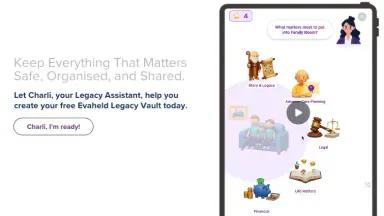
The digital legacy vault supports separate Rooms for health, legal, financial and story material. Give a respite worker the routine and emergency contacts, a solicitor the relevant documents and questions, and family the stories intended for them. Do not create one all-access family account.
The Australian Cyber Security Centre recommends multi-factor authentication. Review permissions after a relationship change, staff change, move, death or change in authority.
Earlier preparation can follow a person across seniors-living services, residential aged care, hospitals and other medical care providers, reducing the need for families to reconstruct preferences and routines during every transition. A connected healthcare approach to end-of-life care can keep clinical responsibilities separate from the personal context, relationships and wishes that support dignified care.
How care organisations can participate
Care organisations can provide education, referrals, onboarding support and a person-controlled record pathway. They should explain exactly what staff can access and avoid turning private family stories into organisational data. Access to care must not depend on platform participation.
The healthcare partner pathway supports implementation for care providers and community organisations. The provider should maintain its own clinical and legal records while Evaheld supports the individual's family and planning record.
How Evaheld supports the partnership
Evaheld can organise current care information, legal-document locations, trusted contacts, routines, photographs, voice notes and family messages in separate private Rooms. The person or authorised account holder chooses who receives each layer and can update access as care changes.
Evaheld does not diagnose dementia, determine capacity or replace professional care. It helps preserve the person's own words and make practical information findable. Families can begin with one useful item and add more only when it improves care or connection.
Start a free DementiaTLC and Evaheld family record with one contact, one routine and one story.
Common family planning mistakes
Waiting for a crisis before recording contacts and routines.
Treating a diagnosis as proof that the person cannot participate.
Using memory prompts as tests.
Giving every relative access to every record.
Leaving several files labelled as the current version.
Assuming the main carer has legal authority.
Moving possessions before consent and authority are clear.
Recording vague instructions instead of practical details.
Ignoring carer limits and backup arrangements.
Expecting the digital record to replace clinicians or legal professionals.
Family implementation checklist
Ask the person what they want recorded and shared.
Create an urgent health and contact summary.
Record routines, communication and calming strategies.
Identify formal authority and document locations.
Preserve one story or message at a time.
Divide carer tasks and name backups.
Prepare respite, hospital and move handovers.
Set access by role rather than relationship alone.
Review after every major care or family change.
Keep clinical, legal and financial decisions with qualified professionals.