Families taking the next step may also find our legacy planning resources useful.
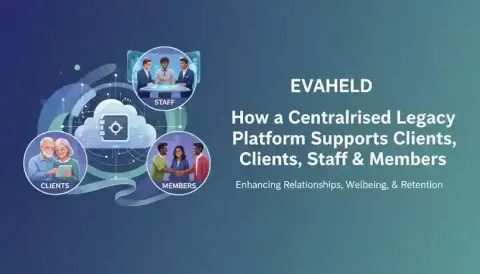
Legacy planning can support clients, staff and members by giving each person a private place to organise important records, wishes, trusted contacts and family messages before a life transition makes the work harder. The organisation provides access, education and referral pathways. The person decides what to create, store, update and share.
The most useful partner programmes are narrow enough to understand and broad enough to remain relevant. A financial-planning client may begin with document locations and beneficiary questions. An employee may organise parent-care information. A health-service user may record values and contacts. A member may preserve family stories or prepare a practical handover. These are different journeys, so they should not be forced into one generic onboarding sequence.
How can legacy planning support clients, staff and members?
It fills the preparation gap between a person’s private life and the formal services they use. A solicitor may prepare a will, a clinician may document care, an adviser may manage financial planning and an employer may provide wellbeing support. None of those services automatically creates one family-held record showing where documents are stored, who should be contacted and what personal context matters.
A partner legacy pathway can help people:
- Identify trusted family members, advisers, carers and decision-makers.
- Record where current wills, powers, directives, insurance and other documents are held.
- Organise urgent health and household information.
- Preserve photographs, stories, values and private messages.
- Explain the reason behind a decision without changing a formal document.
- Share selected information with different people according to role.
- Review the record after a family, health, work or housing change.
The value is practical and relational. Finding Strength in Stories During Life’s Transitions shows how personal stories can help people retain identity and continuity while circumstances change.
Choose the audience before designing the programme
Audience | Likely first need | Useful first action | Important boundary |
|---|---|---|---|
Professional clients | Preparation for advice or a family decision | Add document locations, family structure and questions | The tool does not replace professional judgement |
Employees | Family readiness and private life administration | Add contacts, one document location and household instructions | HR cannot inspect private content |
Association members | Portable support across life stages | Create a personal index and trusted-access plan | Participation remains voluntary |
Health or aged-care users | Care values, routines and family handover | Record communication needs and decision-maker contacts | Clinical records remain in approved systems |
Charity supporters | Values, family context and future-gift explanation | Record the story and adviser contacts | Support is separate from fundraising pressure |
Therapy clients or staff | Private reflection, family messages and practical planning | Choose one private message or information category | The vault is separate from the clinical record |
The World Wide Web Consortium’s introduction to web accessibility is relevant at the design stage. Different audiences use different devices, have different literacy and access needs, and may require assisted onboarding that does not expose private content.
Define the partner’s role in one paragraph
A partner should be able to explain the service without improvisation:
Evaheld gives you a private place to organise important information, wishes, documents and messages for people you choose. Our organisation provides access and support but does not inspect your personal content. Formal legal, medical, financial and tax decisions remain with the relevant professional or institution.
This statement separates four roles: the user owns the personal record, Evaheld provides the platform, the partner supports access and the appropriate professional provides regulated or specialist advice.
The Office of the Australian Information Commissioner explains Australian privacy rights. The partner’s privacy notice should state which administrative data it receives, whether aggregate reporting is used and how a person can seek support without disclosing family content.
Start with one useful record, not a complete life plan
A large “complete your legacy” request is likely to be postponed. The first session should produce an immediate result. Ask the person to complete four items:
- One trusted contact.
- One important document location.
- One urgent family or household instruction.
- One review date.
People can then add care information, estate records, family stories and messages at their own pace. The staged approach respects different levels of readiness and makes the service useful to someone who wants practical organisation but not a reflective legacy project.
The Australian Red Cross provides preparedness guidance that supports small, current actions. The planning model in family stories and legacy planning shows how practical records and personal meaning can grow together without requiring a complete autobiography.
Use life events as review triggers
Annual reminders are useful, but a life event is usually a stronger prompt. Appropriate review points include:
- Marriage, separation or a new partner.
- Birth, adoption or a new caring responsibility.
- Diagnosis, hospital admission or discharge.
- Move into home care, retirement living or aged care.
- Retirement, redundancy or a business transition.
- Death of a trusted person, executor or beneficiary.
- New will, power, directive, insurance policy or adviser.
- Change of email, phone, password manager or digital account.
Review prompts should state the task rather than use vague language. “Confirm your emergency contact and current will location” is more actionable than “Update your legacy”.
Life Transitions Beyond the Will explains why a document review should also consider family responsibilities, personal values and access instructions. The journey design in client transition support helps partners place prompts at moments when people are already reconsidering their affairs.
Prevent care and advice silos from becoming a family problem
A person may have information spread across a GP, hospital, pharmacy, solicitor, insurer, adviser, employer and several relatives. Each system may be correct within its own scope, yet nobody has a current map showing how the pieces connect.
A family-held record should not copy every provider file. It should identify the authoritative source, relevant contact, current document and personal context. This reduces repeated explanations while preserving the distinction between clinical, legal, financial and family records.
The Australian Commission on Safety and Quality in Health Care describes the importance of clinical handover. The organisational problem is explored in Care Silos and Client Context. Partners should design the legacy record as a coordination layer, not a competing source of professional truth.
Support financial and insurance clients without promising outcomes
Financial and insurance partners can help people record providers, policy or fund references, beneficiary-review dates, adviser contacts and the location of current documents. They should not imply that an uploaded note changes a nomination, guarantees a claim or determines tax treatment.
ASIC explains the distinction between general information and financial advice. MoneySmart provides information about making a life-insurance claim.
Policyholder Legacy Planning provides a bounded workflow for policy details, contacts and personal context. The partner can support preparation while formal assessment remains with the insurer, trustee or other responsible institution.
Protect dignity in health and aged-care settings
Health and care organisations should ask only for information needed for the agreed purpose. A resident or patient may share communication preferences, routines and selected family contacts without making every legal, financial or personal record visible to staff.
The Office of the Australian Information Commissioner explains the sensitivity of health information. My Aged Care outlines the aged-care assessment process.
The consent principles in Supporting Dignity and Choice in Care Settings apply across hospitals, home care, disability support and residential care. Sector-specific implementation is covered in health and aged-care partner support.
Introduce the staff benefit without creating surveillance
Employees should know that participation is voluntary, private content is not part of their HR file and managers cannot see whether they have written a message or uploaded a document. Administrative reporting should remain limited to what is genuinely required to manage the benefit.
Safe Work Australia provides information about psychosocial hazards. Fair Work explains Australian sick and carer’s leave. The legacy-planning benefit should complement, not replace, leave, flexibility, EAP, financial wellbeing and carer support.
The detailed workplace model in client and staff legacy planning covers launch wording, manager scripts, privacy, referrals, accessibility and a 90-day implementation process.
Keep therapy and private life planning separate
A psychologist or counselling service may offer a private planning benefit to clients or staff, but vault content should not automatically become part of the clinical record. The person may use it for family messages, practical information, future wishes or reflective writing that they do not want assessed in therapy.
The Australian Psychological Society provides information about psychology and professional support. The service should state when a safety concern or disclosure needs to be handled under professional obligations and when content remains outside the therapeutic relationship.
Train staff to respond without becoming advisers
Partner staff need a response matrix before launch:
Question | Partner response | Referral |
|---|---|---|
How do I activate or share my account? | Explain the product process and privacy boundary | Evaheld or designated support |
Is this will valid? | Do not interpret or guarantee validity | Relevant legal professional or official source |
Who should receive my super or insurance? | Explain the provider’s process only | Provider and authorised adviser |
Which treatment should I refuse? | Do not give clinical advice | Treating clinician and relevant planning service |
I am distressed or unsafe | Follow the organisation’s safety and support process | Emergency, clinical, EAP or crisis support as applicable |
Responding to estate and legacy questions helps staff identify what can be answered as product information and what must be referred.
Make family stories useful rather than decorative
Storytelling should preserve identity, relationships and the reason behind decisions. A photograph should include names, date, place and context. A voice recording should have a title, intended recipient and permission. A family tradition should explain who taught it and why it matters.
The US National Archives provides guidance on family archives. Story collections should also respect living people’s privacy and cultural authority.
Evaheld can use Content Requests to invite a relative to add a story or identify a person without giving them unrestricted access. This makes contribution possible while preserving individual ownership and audience controls.
Design referral pathways around real client needs
Useful programmes maintain a current directory for legal, financial, tax, care, grief, carer and crisis questions. The directory should name the purpose of each service, eligibility, contact route and the date it was checked.
Palliative Care Australia provides advance care planning resources. Carers Australia describes unpaid caring roles. Partner staff should not send every question to one generic support line.
Measure usefulness without reading private content
Partners can measure:
- Activation and completion of the first useful record.
- Return use and review activity.
- Accessibility and onboarding feedback.
- Support themes and abandoned steps.
- User confidence about privacy and family readiness.
- Whether staff understand referral boundaries.
- Whether families or professionals report fewer avoidable information gaps.
Do not score employees, clients or members according to how much personal content they create. A short current record may be more useful than hundreds of unlabelled files.
The NIST Privacy Framework helps organisations consider governance, data processing and individual control. Metrics should remain proportionate to the benefit’s stated purpose.
Use a phased implementation rather than a sitewide launch
Phase 1: define
Choose one audience, one problem, one privacy statement and one first action. Confirm eligibility, support responsibilities, accessibility and referral routes.
Phase 2: pilot
Test with a small group using different devices, abilities and levels of digital confidence. Record product questions without asking to see private content.
Phase 3: launch
Publish a direct explanation, provide one activation route and offer optional follow-up prompts tied to life events.
Phase 4: review
Assess clarity, support, privacy confidence, abandoned steps and real handover usefulness. Repair problems before expanding to another audience.
Common programme mistakes
- Launching to every audience with one generic message.
- Using death, fear or guilt to drive activation.
- Failing to state what the partner can see.
- Asking staff or frontline workers to improvise advice.
- Combining staff-benefit, clinical, fundraising or performance records.
- Collecting more personal information than the programme needs.
- Using a long onboarding questionnaire before delivering value.
- Ignoring accessibility and assisted activation.
- Measuring success through private-content volume.
- Failing to review referrals, permissions and product claims over time.
How Evaheld supports partners and individuals
Evaheld combines an online will maker with a Digital Legacy Vault. Users can create and store a will, organise care and estate records, preserve photographs and messages, invite family contributions and share selected content through private and shared Rooms.
The partner can provide the benefit and support activation without becoming the owner of family content. The person can continue updating the account as circumstances change and can share selected items with loved ones and advisers.
Partner implementation checklist
- Choose one audience and one real planning problem.
- Define the partner, platform, user and professional roles.
- Publish the privacy and visibility boundary.
- Use one first task that can be completed quickly.
- Introduce life-event review prompts.
- Separate family content from provider and clinical systems.
- Train staff with response and referral scripts.
- Test accessibility and assisted onboarding.
- Measure aggregate usefulness without inspecting private content.
- Review the programme before expanding to another audience.