What should advance care planning software do in Australia?
Advance care planning software should help a person record healthcare wishes, keep supporting information in one organised place, and share the right details with trusted people before a stressful moment arrives. In Australia, that usually means more than a simple document editor. The software needs to support conversations with family, help people understand what belongs in an advance care directive, and make important details easy to revisit as health, family roles and care arrangements change.
The practical benchmark is clear: a useful platform should make planning easier without pretending to replace clinicians, lawyers or state-specific forms. NSW Health information on acp default guidance frames the task as thinking ahead, discussing values and documenting preferences, while Australian planning steps show how families can connect those wishes to everyday records, messages and access decisions. Good software respects that boundary. It helps people prepare, organise and communicate; it should not give personalised legal or medical advice.
That distinction matters because families often look for software when they are already carrying pressure. A parent may have a new diagnosis, an adult child may be coordinating aged care, or a couple may simply want their wishes to be easier to find. The best advance care planning software Australia 2026 users should consider is software that reduces confusion, keeps evidence close to the person, and helps relatives know what has been discussed rather than leaving them to search through emails, folders and old forms.
For carers who are also dealing with Centrelink evidence, care notes and household records, applying for Carer Payment in Australia can help connect the software decision to the paperwork families may already be managing.
How does Evaheld fit advance care planning and legacy planning resources?
Evaheld is best understood as a secure digital legacy vault with health, care and story tools around it. For this topic, its value is not just that a person can store a directive or write down preferences. It is that healthcare wishes can sit beside practical notes, emergency contacts, messages, memories, identity details and family guidance. That combination is useful because real care decisions rarely arrive as tidy paperwork problems. Families need context, not only files.
The health and care vault is designed for the sensitive information families may need when someone cannot easily explain everything themselves. A person can document healthcare wishes, organise important care details and create a clearer path for trusted supporters. The broader digital legacy vault adds space for life admin, documents, values, messages and story, so the same planning process can cover both practical preparation and emotional legacy.
Evaheld also sits naturally beside the person-centred care principles described by the World Health Organization palliative care overview: care should respond to the person as well as the illness. Software cannot create family agreement on its own, but it can hold the words, records and context that make agreement more likely. For families comparing options, Evaheld is strongest when they want advance care planning, practical access and personal legacy to live in one private system.
Health And CareWhat features matter most in 2026?
The most useful features are the ones that make planning specific, findable and updateable. A strong platform should allow a person to capture treatment values, preferred contacts, substitute decision-maker details, care notes, document locations and explanatory messages. It should also make it obvious what still needs professional help, such as witnessing requirements or state-based forms. MedlinePlus explains advance directive basics in plain language, and Australian families should still check their state or territory requirements before treating any stored document as complete.
Because software can only help if the right people are named and prepared, choose the right person to make medical decisions is a useful companion before families rely on any stored directive or access setting.
Security and sharing are just as important as content creation. Families need a way to share selected information without handing over every private detail. That means permission controls, clear account access, an update process, and a way to distinguish emergency information from deeply personal messages. Evaheld's family communication planning and health wishes sharing controls are relevant here because the hard part is often not writing a preference; it is making sure the right people know where it is and why it matters.
Good software also supports review. A directive written in a crisis may be different from preferences recorded after recovery, a move into aged care, or a new diagnosis. A helpful platform prompts the person to keep their plan current and makes revisions easier to explain. That is where changing treatment preference support matters: advance care planning is not a one-time upload, and the platform should make updates feel normal rather than exceptional.
How should families compare software options?
Start by separating four jobs: documenting wishes, storing records, sharing access and preserving personal meaning. Some tools only do one of these well. A form builder may help someone draft language, but it may not help relatives find documents later. A cloud folder may store files, but it may not explain what the person values. A messaging tool may hold memories, but it may not suit emergency care details. The better comparison is not which app has the most features; it is which one supports the whole family workflow.
Use a simple checklist. Can the person record healthcare wishes in ordinary language? Can they attach or reference formal documents? Can they name trusted people and explain roles? Can access be limited by room, folder or purpose? Can a carer find urgent details quickly without searching through everything else? Can the owner update the plan as circumstances change? The future-proof planning approach is useful because it treats advance care planning as a living system, not a static file.
Families should also look at emotional usability. A technically complete tool may still fail if it feels cold, confusing or too legalistic. The best platform helps someone say, in their own words, what comfort, dignity, faith, independence, family contact or home means to them. Those words often guide relatives when a formal document does not cover the exact situation. Evaheld's strength is that those wishes can sit next to story, gratitude and practical instructions, which makes the plan more humane and easier to act on.
What should be in an advance care planning software checklist?
Clear spaces for values, goals of care, treatment preferences and comfort priorities.
Secure storage for related documents, contacts, medication notes and care summaries.
Specific sharing controls for family, carers, substitute decision-makers and advisers.
A review process so wishes can be updated after diagnosis, recovery or family change.
Emergency access options that show only the information a responder or carer needs.
Plain-language guidance that encourages professional advice where legal or medical decisions are involved.
Room for personal messages, cultural context, spiritual wishes and family explanation.
Clinical research repeatedly shows that documentation works best when it follows meaningful discussion. Software should therefore help people prepare for conversations, not hide from them. Evaheld supports that by connecting practical health planning with personal messages and legacy material, including the reasons advance care directives matter and the softer family context behind those choices.
Health And CareHow important are security and emergency access?
Security is central because advance care planning software often contains health details, identity information, family contacts and private messages. A platform should use clear access controls, encourage strong account protection and avoid making sensitive records public by default. The CISA strong password guidance is a useful baseline for account safety, while the Evaheld data security explanation helps families understand how Evaheld approaches protection inside the vault experience.
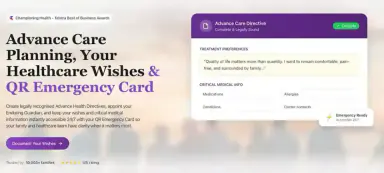
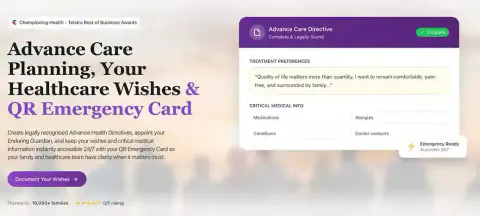
Emergency access is a separate design question. In a crisis, a carer or responder may need allergies, key contacts, conditions or instructions quickly, but they do not need access to every private memory or document. Evaheld's QR emergency access explanation is relevant because it separates quick access from full vault access. That is important for families who want practical support without turning the whole planning archive into an emergency file.
For families who also need a visible emergency cue, a medical alert bracelet guide can help separate what belongs on the body from what belongs inside a private care record.
Phishing and account recovery also deserve attention. The FTC phishing advice is a reminder that families should be cautious with messages asking for passwords, codes or urgent payment. Software can help by providing a known place to store and update instructions, but people still need sensible habits: unique passwords, careful sharing and a clear process for changing access when family roles shift.
How does Evaheld compare with simple documents or cloud folders?
A document is useful, but it is rarely enough on its own. A PDF can become outdated, sit in the wrong folder, or fail to explain the conversations behind it. A cloud folder can hold many files, but it may not tell a relative what matters first. Evaheld adds structure: health wishes, practical documents, story, messages and access decisions can be organised around the person's life rather than scattered across separate tools.
For the digital-life side of planning, an after death social media instructions template can help families document cloud photos, social accounts and account wishes without mixing them into medical or care records.
That structure becomes especially helpful when more than one person is involved. Adult children, partners, carers and advisers may each need different information. A single shared folder often creates either too much access or not enough. Evaheld's room and vault model is better suited to staged sharing because it can separate health details, personal memories and practical records. Families comparing software should ask whether a tool supports the way care actually happens: gradually, collaboratively and under time pressure.
Security standards are also easier to evaluate when a platform explains its controls. The NIST cybersecurity framework and ISO 27001 overview are not consumer buying checklists, but they show the kinds of governance ideas serious systems consider: risk management, access control, monitoring and continual improvement. Families do not need to become security auditors, but they should choose tools that discuss protection plainly and avoid vague promises.
Health And CareWhen is Evaheld the right choice?
Evaheld is a strong choice when the family wants advance care planning to sit beside legacy, communication and practical organisation. It suits people who want to document wishes while they still have time and energy, carers who need a clearer information hub, and families who want personal context preserved alongside formal decisions. It is also useful for people who dislike blank forms because guided prompts can turn scattered thoughts into clearer instructions and messages.
When the need for software follows a progressive diagnosis, a degenerative illness planning guide can help families plan for changing symptoms, documents, roles and future decisions over time.
It may not be the only tool a person needs. State-based forms, medical conversations and legal advice may still be required. The Better Health advance care plan guidance and Queensland advance health directive information show why jurisdiction still matters. Local health departments can add further state or territory detail. Evaheld can help store, explain and share wishes, but the person should confirm formal requirements for their state or territory.
For someone beginning now, the simplest path is to record values first, then add contacts, documents and emergency details. Families can use treatment escalation and resuscitation comparisons to understand adjacent terms, then use medical ID card basics to think about what belongs in quick-access information. When the practical pieces are in place, personal messages and legacy notes can make the plan feel less like paperwork and more like care.
When the plan needs to include reassurance for children as well as care wishes, a legacy letter to my kids template can keep personal guidance separate from clinical, legal and emergency information.
If you want one private place for health wishes, family guidance and personal legacy, create a secure Evaheld health and legacy vault and begin with the details your trusted people would need first.
What should you do before choosing software?
Before choosing any platform, write down the decisions you are trying to make easier for other people. That may include who to call, where documents are stored, what treatments you would want discussed, what comfort means to you, and what stories or messages you do not want lost. This small exercise reveals whether a tool is only storing files or actually helping your family understand you.
Carers should also think about workload. The American Psychological Association caregiving overview notes the broad pressures family carers can face, and advance care planning software should reduce that load rather than add another confusing admin task. If the tool is too hard to update, relatives may stop trusting it. If it is too open, the owner may avoid adding sensitive details. The best fit is a platform that people will keep using.
Finally, decide what needs formal review. Advance care directives, powers of attorney, substitute decision-maker appointments and aged care paperwork may have legal or clinical implications. The AARP advance directive forms overview, UK power of attorney guidance, NHS advance decision to refuse treatment guidance and Age UK advance decision explanation are useful comparisons for families with overseas relatives, but Australian users should still rely on local requirements for Australian documents.
A sensible comparison also includes who will maintain the plan. If one person creates a vault and never explains it, relatives may still hesitate later. Choose a platform that encourages plain notes, named contacts and periodic review, so the plan remains usable rather than becoming another forgotten document.